


Why Skills Development Is Critical for the Autonomous Factory
By Sascha Schuerken, Field Service Engineer
The manufacturing industry is undergoing a rapid transformation. Automation, digitalisation, AI-driven software, and connected production systems are changing how factories operate. However, technology alone is not enough to achieve smart manufacturing goals.
The success of any digital transformation ultimately depends on the people who operate, maintain, and optimise these systems.
As factories become increasingly automated, manufacturers face a growing challenge: ensuring employees have the skills needed to keep pace with technological change. New equipment, software platforms, and data-driven processes require continuous learning and upskilling across all levels of the organisation.
Traditionally, manufacturing training relied on classroom sessions and on-the-job knowledge transfer. While these methods remain valuable, they often struggle to meet the demands of today's fast-moving production environments. Teams need flexible access to training that fits around operational schedules and supports ongoing professional development.
Continuous learning delivers tangible business benefits. Well-trained operators and engineers can improve equipment utilisation, reduce setup times, solve problems faster, and contribute to higher overall productivity. In many cases, improving workforce knowledge can unlock significant performance gains without additional capital investment.
The shift towards autonomous factories is further increasing the importance of workforce development. As production systems become more intelligent and interconnected, employees are taking on new roles as process specialists, automation experts, and data-driven decision makers. To succeed in these environments, they need access to relevant, practical, and up-to-date knowledge.
Digital learning platforms are helping manufacturers address this challenge by providing on-demand access to training resources whenever and wherever they are needed. Online learning enables faster onboarding, standardised knowledge sharing, and continuous skills development across global teams.
To support this journey, Panasonic has created the Autonomous Factory Learning Hub, a dedicated platform designed to help manufacturers build expertise in smart factory technologies, SMT processes, software solutions, equipment operation, and maintenance best practices.
As manufacturing continues to evolve, investing in people will remain just as important as investing in technology. Organisations that prioritise continuous learning will be better positioned to maximise productivity, accelerate digital transformation, and build a more resilient workforce for the future.
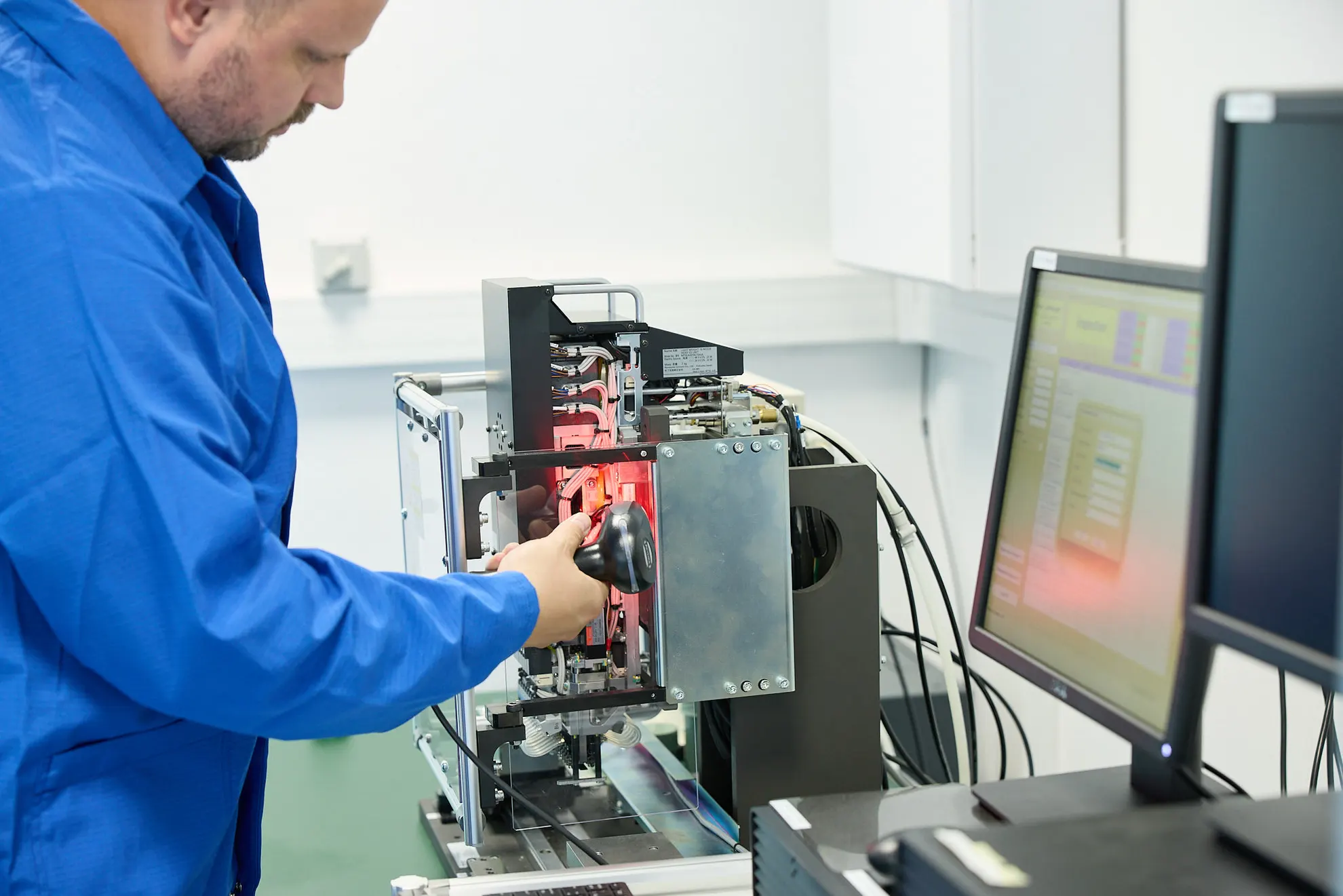
Explore the Autonomous Factory Learning Hub
Discover a wide range of training courses designed to help operators, engineers, and manufacturing professionals develop the skills needed for the next generation of smart factories.
Read more insights…
Case Study
Flexible Robotic Welding Solution for Maximum Product Diversity in Contract Manufacturing
For many manufacturers, automation primarily means the economical production of high volumes. For N&S Schweißtechnik, this was also important, but another challenge had to be addressed: the cost-effective production of a large variety of different products in small batch sizes.
blog
Factory Solutions Brings the Autonomous Factory Vision to Budapest
In September 2026, Budapest became the centre of innovation for electronics manufacturing as Panasonic Factory Solutions welcomed customers, partners and industry experts to its flagship Tech Days event. The two-day gathering focused on a timely theme: how manufacturers can build resilient, adaptive production environments capable of thriving in an increasingly uncertain world.
blog
SMT for AeroDef: Looking Back
At the EPP SMT for AeroDef expert forum, the focus was on the future of high-performance and secure electronics manufacturing. Panasonic Connect demonstrated how intelligent material flow, advanced automation, and end-to-end traceability can help manufacturers meet the growing demands of the defence sector.
article
PANASONIC FACTORY SOLUTIONS CENTRALISES ITS CORE BUSINESS IN EASTERN EUROPE
Panasonic Factory Solutions is strengthening its presence in Central and Eastern Europe by centralising its customer support, engineering, service and development activities in Budapest, Hungary. As part of this strategic investment, the company has opened a significantly expanded Technical Centre, creating a regional hub with dedicated expertise to support electronics manufacturers across the region and beyond.
Sorry there was an error...
The files you selected could not be downloaded as they do not exist.
You selected items.
Continue to select additional items or download selected items together as a zip file.
You selected 1 item.
Continue to select additional items or download the selected item directly.








Share page
Share this link via:
X
LinkedIn
Xing
Facebook
Or copy link: